
Typing.com: The Complete Guide to the World’s Leading Free Typing Platform
In an age where nearly every job, classroom assignment, and personal task involves a keyboard, the ability to type quickly and accurately has quietly become one of the most valuable skills a person can own. Yet formal typing instruction has all but disappeared from many school curriculums, leaving students, job seekers, and professionals to fend for themselves. This is precisely the gap that Typing.com was built to fill. What began as a modest classroom tool has grown into one of the most widely used typing education platforms on the internet, trusted by millions of students, teachers, and independent learners across the globe. This article takes a deep, practical look at this platform — its history, objectives, features, classroom implementation, real-world impact, challenges, and how it compares with other typing tools available today.
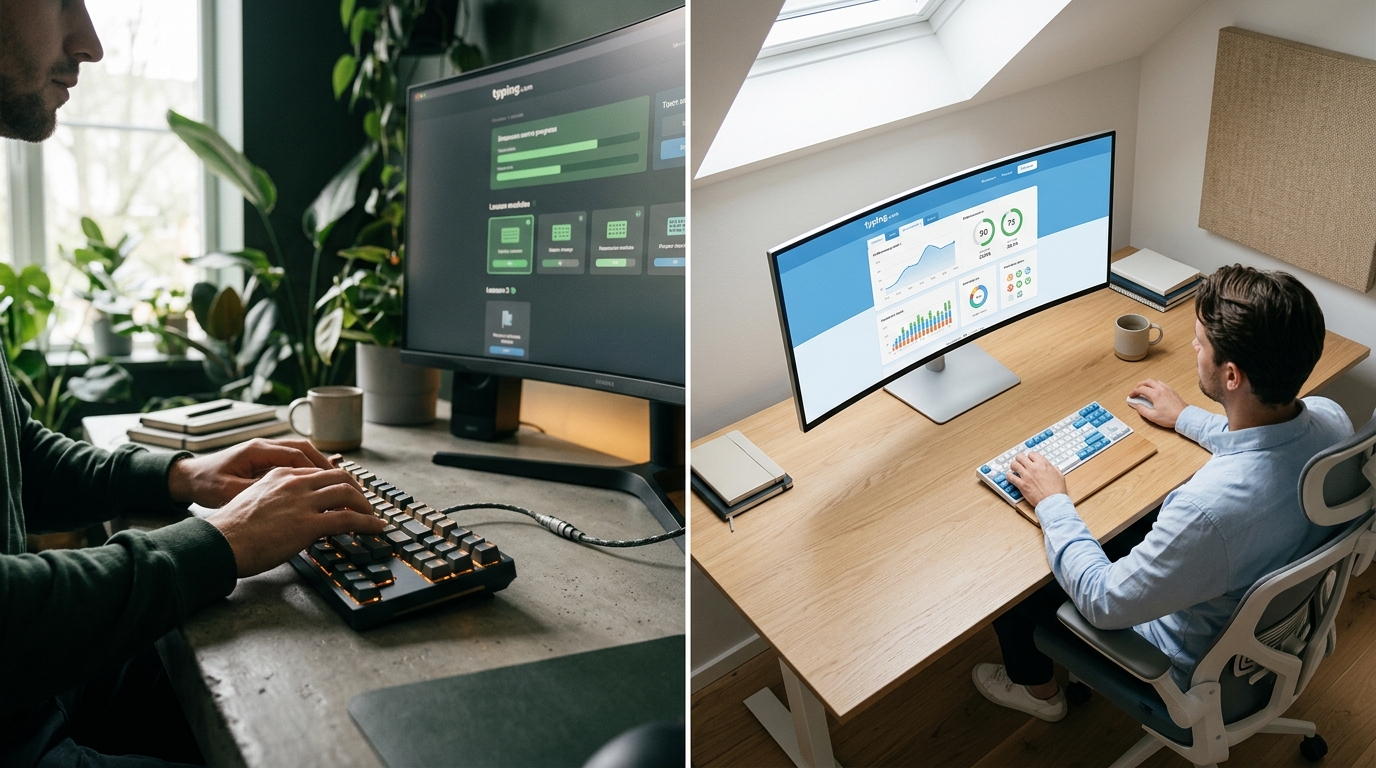
What Is Typing.com and Why It Matters
Typing.com is a free, web-based platform designed to teach touch typing (a discipline often referred to simply as keyboarding), improve keyboarding accuracy, and help users measure their typing speed through structured lessons, games, and tests. Unlike many typing tutors that lock essential features behind a paywall, this service offers its core curriculum at no cost, making it accessible to schools with limited technology budgets, individual learners, and organizations that need to train large groups of people efficiently.
The platform’s importance goes beyond simple convenience. Typing is a foundational digital literacy skill, much like reading or basic arithmetic once was in earlier generations. Students who cannot type efficiently often struggle to keep pace with coursework that requires essay writing, coding, or research submitted digitally. Professionals who type slowly lose valuable hours every week compared to colleagues who can comfortably exceed sixty words per minute. This tool addresses that practical, everyday problem with a structured, gamified, and measurable approach to learning, turning what used to be a tedious classroom drill into an engaging, self-paced journey toward genuine keyboard fluency.
Beyond raw speed, the platform also emphasizes accuracy and posture, two elements that are often neglected when people teach themselves to type informally. Self-taught typists frequently develop habits such as looking down at the keyboard constantly, using only a few fingers, or hunching over the desk in ways that eventually cause discomfort. Structured instruction corrects these habits early, which is one of the strongest arguments for introducing formal keyboarding lessons at a young age rather than leaving the skill to develop haphazardly over years of casual computer use.
The History and Evolution of Typing.com
Typing.com did not emerge overnight as a polished platform. It grew steadily out of the recognition that traditional typing classes — once a staple of middle and high school education — were being phased out as schools shifted focus toward general computer literacy rather than dedicated keyboarding instruction. As classrooms transitioned from typewriters and standalone computer labs to networked devices and one-to-one laptop programs, there was a clear need for a digital-first solution that could scale to entire school districts without requiring expensive software licenses or installations.
Over the years, the platform evolved from a simple lesson-and-test tool into a comprehensive digital citizenship and computer skills hub. Early versions focused almost entirely on the mechanics of touch typing — finger placement, home row practice, and speed drills. As the tool matured, it expanded to include coding lessons, digital literacy modules, keyboarding games for younger learners, and detailed teacher dashboards that allow educators to track class-wide progress in real time. This evolution mirrors a broader shift within educational technology policy: away from isolated skill-building software and toward integrated systems that support classroom management, curriculum planning, and measurable learning outcomes.
Today, the platform is used not just by individual learners but by school districts implementing structured digital literacy programs, corporate training departments onboarding new employees, and adult education initiatives aiming to close the digital skills gap among underserved populations. What started as a niche classroom utility has, over time, positioned itself as something closer to a full digital-readiness curriculum, with typing as its anchor subject.
Core Objectives of the Platform
The mission behind Typing.com can be broken down into several clear objectives, each addressing a distinct need within the broader landscape of digital education.
The first objective is accessibility. By offering its foundational curriculum free of charge, the service ensures that cost is not a barrier to learning a skill that has become essential for academic and professional success. This is particularly significant for schools in lower-income districts or regions with constrained education budgets, where site licenses for premium software are simply not feasible. Free access also matters for homeschooling families and independent adult learners who might not otherwise have institutional support to fund a paid subscription.
The second objective is measurable skill development. Rather than vague promises of improvement, the platform tracks words per minute, accuracy percentages, and error patterns for every user, allowing learners and instructors alike to see tangible, data-backed progress over time. This measurable approach transforms typing practice from a passive activity into a results-oriented learning process, where every session contributes visibly toward a defined goal.
The third objective is scalability for classroom and institutional use. Teachers can create virtual classrooms, assign specific lessons, and monitor dozens or even hundreds of students simultaneously through a single dashboard. This makes the tool particularly attractive to school administrators looking for solutions that integrate smoothly into existing digital learning environments without demanding significant technical overhead or dedicated IT support.
The fourth objective is engagement through gamification. Recognizing that repetitive drills can quickly become tedious, especially for younger learners, the platform incorporates typing games, races, and interactive challenges that make skill-building feel less like a chore and more like play, keeping motivation high across long stretches of practice.
How the Platform Is Structured: Lessons, Games, and Tests
The curriculum is organized into a logical progression that mirrors how touch typing has traditionally been taught in classrooms, just delivered through an interactive digital interface.
Beginners start with home row exercises, learning where each finger should rest and which keys it is responsible for. From there, lessons gradually introduce additional rows, numbers, punctuation, and symbols, building muscle memory incrementally rather than overwhelming the learner all at once. Each lesson typically ends with a short accuracy and speed check, giving immediate feedback on how well the concepts were absorbed and where further practice might be needed.
Beyond the core lessons, the platform features a substantial library of typing games designed to reinforce skills in a low-pressure, entertaining format. These games range from simple key-recognition challenges suitable for elementary-aged children to faster-paced typing races aimed at teenagers and adults looking to sharpen their speed under time pressure. This blend of structured lessons and playful practice helps sustain motivation, particularly among younger users who might otherwise lose interest in repetitive drills after just a few sessions.
Typing tests form another core component. Users can take timed assessments that calculate words per minute and accuracy, providing a clear benchmark of current ability. These tests are especially valuable for job seekers who need to demonstrate typing proficiency for administrative, data entry, or customer service roles, as many employers still request documented typing speed as part of the hiring process. A downloadable or shareable certificate of results often accompanies these tests, giving learners tangible proof of their achievement.
Finally, the service offers digital citizenship and coding modules, expanding its scope well beyond typing alone. These lessons cover topics such as online safety, responsible internet use, and introductory coding logic, reflecting a broader ambition to serve as a comprehensive digital skills resource rather than a single-purpose typing tutor.
Implementation in Schools and Classrooms
One of the platform’s biggest strengths lies in how easily it can be implemented within existing school infrastructure. Because it is entirely web-based, there is no software to install, no ongoing maintenance for IT departments, and no compatibility issues across different devices, whether students are using Chromebooks, Windows laptops, or tablets.
Teachers typically begin implementation by creating a virtual classroom, then either manually adding student accounts or generating a class code that students use to join independently. Once enrolled, teachers can assign specific lesson sequences aligned with grade-level expectations, set pacing goals, and monitor completion rates through a centralized dashboard. This level of administrative control makes it straightforward to integrate typing instruction into a broader curriculum without requiring separate lesson planning from scratch, saving educators significant preparation time each week.
For many districts, this ease of implementation represents a meaningful cost and time saving compared to legacy software that required per-device licensing, manual updates, and dedicated computer lab scheduling. The shift toward cloud-based, device-agnostic tools reflects a wider trend in education technology, where accessibility and low administrative burden are increasingly prioritized alongside instructional quality and curriculum rigor.
Beyond K-12 education, some universities and vocational training programs have also adopted this resource to help students preparing for administrative, transcription, or clerical careers build the keyboarding speed and accuracy those roles demand. Corporate training departments have similarly used it as a low-cost onboarding tool for new hires whose roles involve heavy data entry or customer support typing, reducing the ramp-up time before new employees reach full productivity.
Regional and Institutional Adoption Patterns
While Typing.com operates as a single global service, its adoption patterns vary noticeably depending on local education policy, technology infrastructure, and school funding levels. In regions where education boards have prioritized digital literacy standards, keyboarding instruction is often formally reintroduced into elementary and middle school curriculums, and free platforms become the default choice for meeting those requirements without added budget strain.
In areas with stronger technology infrastructure and higher rates of one-to-one device programs, adoption tends to be more consistent across entire school districts, with typing instruction embedded directly into weekly class schedules. In regions where infrastructure is less developed or where schools share limited computer labs, usage tends to be more sporadic, often concentrated into short computer literacy units rather than sustained, semester-long instruction.
This uneven regional impact highlights a broader pattern seen across educational technology adoption generally: tools that are free and web-based tend to see the fastest uptake in under-resourced schools precisely because they eliminate cost as a barrier, while well-funded districts sometimes have access to a wider range of paid alternatives and may use free platforms as a supplementary rather than primary resource. In either case, this zero-cost model has played a meaningful role in narrowing the gap between schools with strong technology budgets and those without, including many rural schools where access to premium software has historically lagged behind urban districts. As broadband expansion initiatives continue to reach more remote communities, this gap is likely to narrow further, extending the reach of free digital learning tools to areas that previously had little consistent access to structured typing instruction.
Real-World Success Stories
Across classrooms and individual households alike, there are countless examples of measurable improvement linked to consistent use of Typing.com. Elementary school teachers frequently report that students who begin the school year barely able to locate keys without looking down are, within a semester of regular fifteen-minute practice sessions, typing complete sentences using proper finger placement and achieving speeds of twenty to thirty words per minute.
At the high school level, students preparing for standardized testing or college coursework that requires typed essays often use the tool to build the speed and endurance needed to complete timed writing assignments without the added stress of hunting for keys. Several students have credited consistent practice with helping them comfortably exceed forty to fifty words per minute by graduation, a speed that meaningfully reduces the time burden of research papers, applications, and online coursework.
Adult learners re-entering the workforce, particularly those transitioning into administrative or remote customer service roles, have also used the platform to meet minimum typing speed requirements listed in job postings. For many, achieving a documented typing test score above the forty or fifty words-per-minute threshold has directly translated into qualifying for positions that would have otherwise been out of reach. Some career-changers have described the process as a turning point, noting that a few months of consistent fifteen-minute sessions were enough to move them from feeling intimidated by typing tests to confidently passing them.
These individual success stories, multiplied across millions of users, illustrate the platform’s practical, real-world value well beyond the classroom. They also underscore a broader point about digital-skills training generally: small, consistent, low-cost interventions can produce outsized benefits for people who might otherwise be excluded from certain job opportunities purely because of an underdeveloped keyboarding skill.
Comparing Typing.com with Other Typing Platforms
The typing education space includes several well-known competitors, each with its own strengths and target audience. When compared against these alternatives, several distinctions become clear.
Compared to subscription-based typing software aimed primarily at corporate training, this service’s free core curriculum gives it a significant advantage for individual learners, schools, and nonprofit organizations operating with limited budgets. Paid alternatives often justify their cost through advanced analytics, custom curriculum design, and dedicated customer support, which may appeal more to large enterprises than to individual users or public schools.
Compared to simpler, game-only typing websites that focus purely on entertainment without structured lesson progression, this platform offers a far more comprehensive educational framework, combining games with genuine skill-building curriculum, progress tracking, and classroom management tools. This makes it more suitable for formal instruction rather than casual, unstructured practice.
Compared to typing programs bundled within larger educational software suites, the standalone, single-purpose design of this tool often makes it easier and faster for teachers to implement without needing to navigate a broader, more complex system just to access typing lessons. This simplicity is frequently cited as a key reason schools choose it over bundled alternatives that require more extensive setup and staff training.
Ultimately, the combination of zero cost, classroom management functionality, gamified engagement, and measurable progress tracking positions this platform as one of the most balanced options available for a wide range of users, from young children learning their first keystrokes to adults refining professional-level typing speed.
Pricing, Premium Features, and What’s Included for Free
A common question among new users concerns exactly what is included at no cost versus what requires a paid upgrade. The foundational experience — home row lessons, progressive keyboarding units, typing games, and standard speed tests — is available without payment, which is a significant differentiator in a market where many competitors gate even basic lessons behind a subscription.
Premium tiers, where offered, typically unlock deeper reporting for teachers, additional curriculum content such as expanded coding modules, custom branding options for schools, and priority customer support. For an individual learner simply trying to build keyboard proficiency, the free tier is generally more than sufficient. For school districts managing thousands of student accounts and requiring detailed compliance or progress reporting across an entire academic year, a premium plan may offer worthwhile efficiency gains that justify the added cost.
This tiered structure reflects a sustainable freemium model common across educational technology: keep the core learning experience free and accessible to maximize reach and social impact, while reserving advanced administrative and analytical tools for institutions with the budget and need for them.
Practical Tips for Getting the Most Out of Typing Practice
Consistency matters far more than long, infrequent sessions. Learners who practice for fifteen to twenty minutes several times a week tend to build muscle memory more effectively than those who attempt occasional hour-long sessions once every few weeks. Short, regular practice keeps finger placement fresh in the mind without inducing the fatigue that often leads to sloppy technique.
Posture and hand position deserve as much attention as speed. Sitting upright, keeping wrists slightly elevated rather than resting heavily on the desk, and resisting the urge to glance down at the keyboard all contribute to long-term typing efficiency and help prevent strain injuries that can develop from poor ergonomic habits sustained over years of daily computer use.
Focusing on accuracy before speed is another widely recommended strategy. Typing quickly while making frequent errors ultimately slows a person down once correction time is factored in. Building a strong foundation of accurate keystrokes first, then gradually increasing pace, tends to produce faster and more durable improvement than chasing speed alone from the outset.
Who Benefits Most from Using Typing.com
Not every learner approaches keyboarding practice with the same goals, and part of what makes this platform effective is how well it adapts to different types of users. Young children benefit from the playful, low-stakes format of the typing games, which introduce finger placement and letter recognition without the pressure of formal testing. Middle and high school students, on the other hand, tend to benefit most from the structured lesson-and-test format, which mirrors the pacing of a traditional academic course and prepares them for timed writing assignments and standardized digital assessments.
College students and young professionals often turn to the platform specifically to sharpen speed and reduce errors before entering roles that involve heavy written communication, coding, or data entry. For this group, the timed tests and detailed accuracy breakdowns are particularly valuable, since they provide objective proof of proficiency that can be referenced during job applications or performance reviews.
Career-changers and adult learners re-entering the workforce after time away represent another important group. Many arrive with rusty or self-taught typing habits that slow them down considerably compared to formally trained peers. For these learners, the platform’s structured curriculum offers a low-pressure way to rebuild fundamentals from the ground up, often within just a few weeks of consistent practice, without needing to enroll in a formal course or pay for private tutoring.
Educators themselves also benefit, albeit indirectly. By offloading the repetitive, time-consuming task of monitoring individual typing drills to an automated system, teachers can dedicate more classroom time to higher-value instruction, while still maintaining full visibility into how each student is progressing through the material.
Challenges and Limitations
Despite its strengths, the platform is not without limitations worth acknowledging. Some advanced features, detailed reporting tools, and expanded curriculum options are reserved for premium subscription tiers, meaning schools or individuals seeking the most robust data analytics may need to budget for a paid plan rather than relying solely on the free version.
Internet dependency is another limitation. Because the service is entirely web-based, schools or households with unreliable internet access may find consistent practice difficult, particularly in rural or remote areas where broadband infrastructure remains inconsistent. This challenge is not unique to this platform but reflects a broader issue affecting cloud-based educational tools generally, and it underscores why continued investment in rural connectivity remains important for equal access to digital learning resources.
Engagement can also vary depending on age group and individual learning style. While gamified elements help sustain motivation for many users, some older students or adults preparing for professional typing tests may find the more playful elements less relevant to their goals, preferring a more streamlined, no-frills practice environment instead.
Finally, like any self-paced learning tool, outcomes depend heavily on consistency. Without teacher oversight or self-discipline, some users may complete only a handful of lessons before losing momentum, underscoring the importance of structured implementation, whether through classroom assignment or personal accountability, to achieve meaningful long-term improvement.
The Broader Digital Literacy Ecosystem
Typing instruction rarely exists in isolation; it is typically one component of a much larger digital literacy framework that schools and training programs aim to build. The expansion of this platform into digital citizenship and introductory coding lessons reflects an understanding that keyboarding proficiency alone is not sufficient preparation for a technology-driven world. Students also need to understand safe internet use, basic computational thinking, and responsible digital communication.
This broader positioning has allowed the service to remain relevant even as some educators debate whether dedicated typing instruction is still necessary in an era of voice-to-text technology and increasingly capable predictive input systems. While such technologies have reduced typing demands in certain contexts, the overwhelming majority of academic, administrative, and professional tasks still rely on efficient keyboard input, keeping the core value proposition of structured typing education firmly intact for the foreseeable future.
Future Prospects and Ongoing Development
Looking ahead, the trajectory of this platform and similar tools will likely continue to be shaped by a few key trends. Artificial intelligence-driven personalization is an area with significant potential, allowing lesson pacing and difficulty to adjust dynamically based on an individual learner’s specific error patterns rather than following a fixed, one-size-fits-all curriculum. This kind of adaptive learning could meaningfully shorten the time it takes learners to reach proficiency by focusing practice precisely where it is needed most.
Expanded accessibility features also represent a likely area of continued investment, ensuring that learners with different physical abilities or learning needs can engage with the curriculum effectively. As awareness of inclusive design grows across the education technology sector, platforms that fail to accommodate diverse learners risk losing relevance, making accessibility improvements a natural and necessary area of ongoing development.
Deeper integration with broader learning management systems used by schools is another probable direction, streamlining the process of assigning, tracking, and reporting on typing progress alongside other academic subjects within a single unified dashboard. As remote and hybrid learning models remain a fixture of modern education following their rapid expansion in recent years, tools that fit seamlessly into digital classroom ecosystems will likely see continued strong adoption.
Finally, as the job market continues to demand baseline digital fluency across nearly every industry, the long-term relevance of structured typing education is unlikely to diminish. If anything, the growing expectation that even entry-level positions require comfortable, accurate keyboard use suggests that free, accessible typing platforms will remain a foundational resource for learners of all ages well into the future.
Conclusion
This platform has grown from a straightforward typing tutor into a comprehensive, accessible resource supporting typing instruction, digital citizenship, and foundational coding skills for millions of users worldwide. Its free core curriculum, combined with robust classroom management tools and engaging, gamified practice, has made Typing.com a go-to choice for schools, individual learners, and organizations seeking to build essential keyboarding proficiency without significant cost. While it faces the same infrastructure and engagement challenges common to many digital learning tools, its measurable impact on student typing speed, accuracy, and overall digital literacy is well documented through years of classroom use and individual success stories. As digital skills continue to shape academic and professional opportunity, this platform is likely to remain an essential part of how learners of all ages build one of the most practical skills of the modern era.