What Are the Symptoms of a Blocked Artery in Your Neck? A Complete Guide
The human neck houses two of the body’s most important blood vessels — the carotid arteries — which supply oxygen-rich blood to the brain, face, and neck. When these vessels narrow or become clogged with fatty deposits, the condition is medically referred to as carotid artery disease, but most people simply describe it as a blocked artery in the neck. Understanding what are the symptoms of a blocked artery in your neck is essential because this condition is often silent in its early stages, only revealing itself once a significant portion of blood flow has already been restricted. By the time warning signs appear, the risk of a life-altering event such as a stroke may already be elevated.
This comprehensive guide walks through the history of carotid artery disease research, the biological objectives behind maintaining healthy blood flow to the brain, how the condition is diagnosed and treated, its regional and demographic impact, real recovery stories, comparisons with related cardiovascular conditions, ongoing challenges in early detection, and what the future holds for prevention and care. Whether you are researching symptoms for yourself or a loved one, this article offers a thorough, medically grounded, and easy-to-follow resource.
Understanding Carotid Artery Blockage
What Is the Carotid Artery and Why Does It Matter
The carotid arteries run along either side of the neck, and you can often feel their pulse just below the jawline. These vessels are the primary highway for blood traveling from the heart to the brain. When fatty plaques — a mixture of cholesterol, calcium, and cellular waste — accumulate along the inner walls of these arteries, the passage narrows. This buildup, known as atherosclerosis, is the underlying mechanism behind most cases of neck artery blockage. As the artery narrows, less oxygenated blood reaches the brain, and if a piece of plaque breaks free, it can travel upward and lodge in a smaller brain vessel, triggering a stroke.
Recognizing what are the symptoms of a blocked artery in your neck early can mean the difference between a manageable medical intervention and a catastrophic neurological event. Unfortunately, because the arteries themselves have no pain receptors, blockage can progress for years without producing any noticeable discomfort, which is why this condition is often called a silent threat.
History and Understanding of Carotid Artery Disease Over Time
Medical awareness of carotid artery disease dates back to the mid-twentieth century, when surgeons and neurologists began linking strokes to blockages in the neck’s major vessels rather than solely to conditions within the brain itself. Early diagnostic tools were rudimentary, relying heavily on physical examination and patient-reported symptoms. The introduction of angiography in the 1950s and 1960s allowed physicians to visualize blood flow directly, marking a turning point in understanding how narrowed arteries in the neck contributed to cerebrovascular events.
By the 1980s, large-scale clinical trials had established clearer evidence connecting carotid stenosis with stroke risk, which reshaped how doctors approached preventive care. Ultrasound technology, followed by computed tomography angiography and magnetic resonance angiography, eventually replaced more invasive diagnostic methods, making it far easier and safer to detect blockages before they caused permanent damage. Today, screening for carotid artery disease is a standard part of cardiovascular risk assessment, particularly for older adults and those with a family history of vascular disease.
This historical progression matters because it explains why public awareness campaigns increasingly emphasize the importance of knowing what are the symptoms of a blocked artery in your neck. The medical community’s improved understanding has translated into better public health messaging, encouraging people to seek evaluation rather than dismiss early warning signs as unrelated or minor.
Common Symptoms of a Blocked Artery in Your Neck
Early Warning Signs You Shouldn’t Ignore
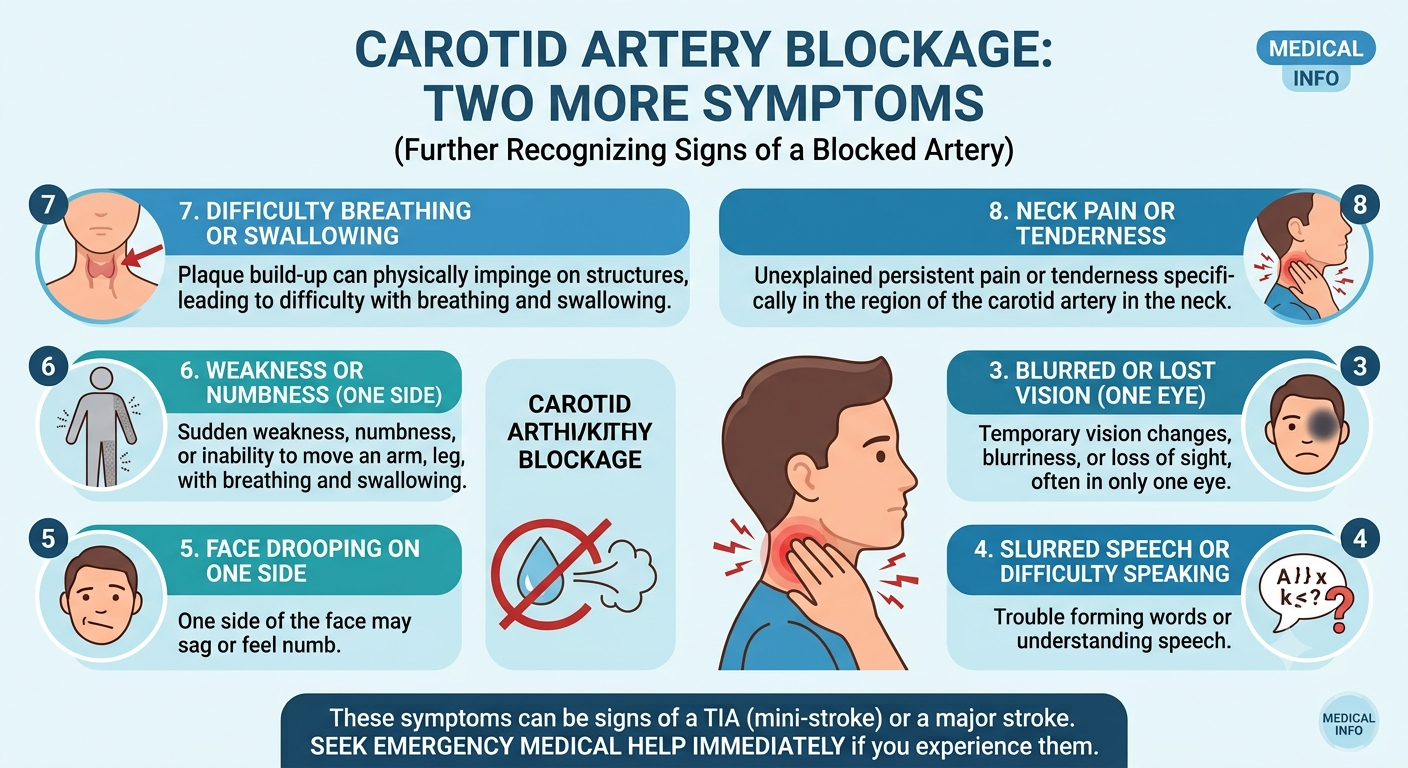
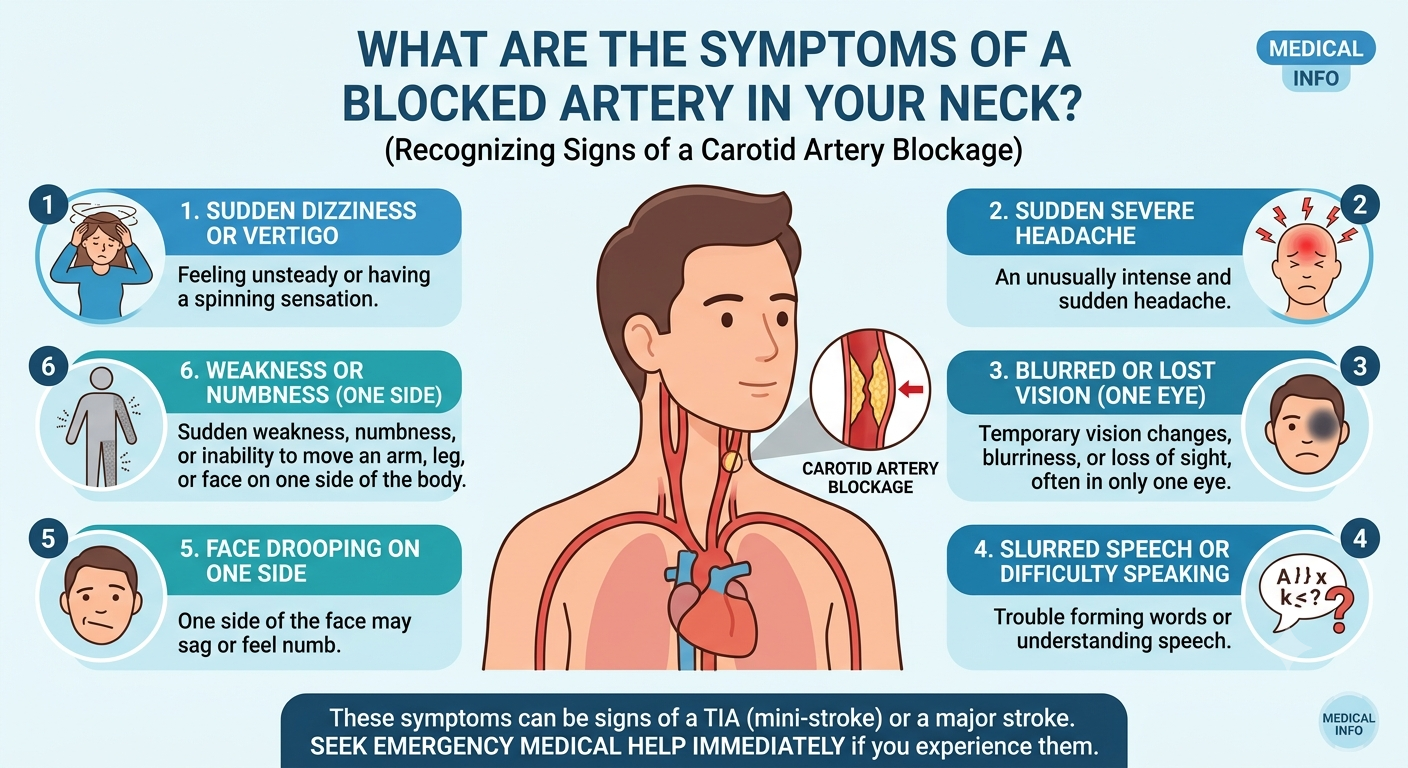
In its earliest stages, a partially blocked carotid artery may produce no symptoms at all. As narrowing progresses, however, subtle signs can begin to emerge. These include occasional dizziness, brief episodes of blurred or dimmed vision in one eye, mild difficulty concentrating, or a fleeting sense of confusion that resolves on its own. Some individuals report a whooshing or rushing sound in one ear, medically known as a bruit-related symptom, though this is more commonly detected by a physician using a stethoscope than noticed by the patient.
Because these early indicators are easy to attribute to fatigue, stress, or aging, many people delay seeking medical attention. This is precisely why understanding what are the symptoms of a blocked artery in your neck matters so much — recognizing even mild, intermittent signs can prompt a timely visit to a healthcare provider and potentially prevent a more serious event.
Symptoms of Transient Ischemic Attack (TIA)
A transient ischemic attack, often called a mini-stroke, occurs when blood flow to part of the brain is briefly interrupted, typically due to a small clot originating from a narrowed carotid artery. Unlike a full stroke, symptoms of a TIA resolve within minutes to a few hours and leave no lasting damage, but they serve as an urgent warning sign. Common TIA symptoms include sudden weakness or numbness on one side of the face, arm, or leg, slurred or garbled speech, temporary loss of vision in one eye often described as a curtain falling over the field of sight, and sudden difficulty understanding others.
A TIA should never be dismissed simply because symptoms fade quickly. Studies consistently show that a significant percentage of people who experience a TIA go on to suffer a full stroke within days or weeks if the underlying blockage is not addressed. Anyone experiencing these symptoms, even briefly, should seek emergency evaluation immediately.
Symptoms of a Full-Blown Stroke Linked to Carotid Blockage
When a carotid artery becomes severely narrowed or a piece of plaque breaks loose entirely, the result can be an ischemic stroke, one of the most serious consequences of untreated arterial blockage. Recognizing the symptoms quickly is critical, as immediate treatment dramatically improves outcomes. Hallmark signs include sudden facial drooping on one side, sudden arm weakness or inability to raise both arms evenly, sudden slurred speech, sudden severe headache without a clear cause, and sudden loss of balance or coordination.
Medical professionals often use the acronym FAST — Face drooping, Arm weakness, Speech difficulty, Time to call emergency services — to help the public remember these signs. Anyone witnessing these symptoms in themselves or another person should treat it as a medical emergency and call for help without delay, since every minute of delayed treatment increases the risk of permanent brain damage.
Silent Symptoms: When Carotid Artery Blockage Shows No Warning
Perhaps the most concerning aspect of carotid artery disease is how frequently it progresses without any noticeable symptoms until a stroke or TIA occurs. In fact, a substantial number of individuals diagnosed with significant carotid stenosis had no prior awareness of any vascular problem. This silent progression underscores the value of routine screening, particularly for individuals over the age of fifty-five, smokers, people with diabetes, and those with high blood pressure or elevated cholesterol.
Because so many cases remain asymptomatic until a critical event occurs, healthcare providers increasingly recommend that at-risk individuals undergo periodic carotid ultrasound screening even in the absence of any complaints. This proactive approach reflects a broader shift in preventive medicine, where the goal is to intervene before what are the symptoms of a blocked artery in your neck become severe enough to signal an emergency.
Causes and Risk Factors Behind Neck Artery Blockage
Several interconnected factors contribute to the development of carotid artery disease. Chronic high blood pressure exerts continuous stress on arterial walls, making them more susceptible to plaque accumulation. Elevated cholesterol, particularly high levels of low-density lipoprotein, provides the raw material for plaque formation. Smoking damages the delicate lining of blood vessels, accelerating the atherosclerotic process, while diabetes contributes to inflammation and vascular damage that further narrows arterial passages.
Obesity, a sedentary lifestyle, poor dietary habits rich in processed and fried foods, and excessive alcohol consumption all compound these risks. Family history plays a meaningful role as well, since genetic predisposition can influence how quickly plaque builds up over a lifetime. Age is another unavoidable factor, as arterial walls naturally lose elasticity over time, making blockage more likely in older populations. Stress, while not a direct cause, often exacerbates other risk factors such as poor sleep, overeating, and elevated blood pressure, indirectly contributing to arterial narrowing.
How Doctors Diagnose a Blocked Artery in the Neck
Diagnosis typically begins with a physical examination, during which a physician listens for an abnormal whooshing sound over the carotid artery using a stethoscope. If this sound, known as a bruit, is detected, further imaging is usually recommended. Carotid duplex ultrasound is the most common first-line diagnostic tool, offering a non-invasive way to measure blood flow and visualize plaque buildup. For more detailed imaging, physicians may order computed tomography angiography or magnetic resonance angiography, both of which provide high-resolution views of the arterial structure.
In select cases, particularly when surgical intervention is being considered, a more invasive catheter-based angiogram may be performed to obtain the clearest possible picture of blockage severity and location. Blood tests to assess cholesterol levels, blood sugar, and inflammatory markers often accompany imaging studies to build a complete picture of a patient’s cardiovascular risk profile. Early and accurate diagnosis remains the cornerstone of preventing the progression of what are the symptoms of a blocked artery in your neck from mild warning signs into life-threatening events.
Treatment Approaches and Implementation of Care
Lifestyle Modifications
For individuals with mild to moderate carotid narrowing, lifestyle changes form the foundation of treatment. Adopting a heart-healthy diet rich in vegetables, whole grains, lean proteins, and healthy fats while minimizing saturated fats and processed sugars can meaningfully slow plaque progression. Regular physical activity, smoking cessation, weight management, and limiting alcohol intake are all central to this approach. Blood pressure and blood sugar control, achieved through both lifestyle and medical management, further reduce the strain placed on arterial walls.
Medications
Pharmacological treatment often includes statins to lower cholesterol and stabilize existing plaque, antiplatelet medications such as aspirin to reduce clot formation, and antihypertensive drugs to keep blood pressure within a healthy range. For patients with diabetes, tightly managing blood glucose levels is equally important in slowing arterial damage. These medications are typically prescribed as long-term, ongoing treatments rather than short-term fixes, since carotid artery disease is a chronic condition requiring sustained management.
Surgical and Minimally Invasive Procedures
When blockage becomes severe, particularly when narrowing exceeds a critical threshold or when a patient has already experienced a TIA or stroke, surgical intervention may be necessary. Carotid endarterectomy, a procedure in which a surgeon removes plaque directly from the artery, has been a standard treatment for decades and carries a strong safety record when performed by experienced vascular surgeons. An alternative, less invasive option is carotid artery stenting, where a small mesh tube is inserted to hold the artery open and improve blood flow, often preferred for patients who face higher surgical risk due to other health conditions.
The choice between these implementation strategies depends on the degree of blockage, the patient’s overall health, symptom history, and individual risk factors, and is typically made through a collaborative discussion between the patient and a multidisciplinary care team.
Regional and Demographic Impact of Carotid Artery Disease
State-Wise and Regional Variations in Prevalence
Carotid artery disease does not affect all populations equally. Regional impact varies considerably based on dietary patterns, healthcare infrastructure, average income levels, and cultural attitudes toward preventive screening. Areas with higher rates of smoking, processed food consumption, and limited access to routine cardiovascular checkups tend to report higher rates of advanced carotid stenosis at the time of diagnosis. In contrast, regions with stronger public health infrastructure and widespread awareness campaigns often catch the condition earlier, when it remains more manageable through lifestyle changes and medication alone.
This regional disparity highlights the importance of localized public health policy framework decisions. Health departments that invest in community screening programs, mobile diagnostic units, and public education around what are the symptoms of a blocked artery in your neck tend to see measurably better outcomes, including lower rates of stroke-related hospitalizations and disability.
Rural vs Urban Healthcare Access
Rural communities frequently face unique barriers when it comes to diagnosing and managing carotid artery disease. Limited access to specialized vascular imaging, fewer cardiologists and neurologists per capita, and longer travel distances to emergency stroke care all contribute to delayed diagnosis and treatment. Rural development initiatives that expand telemedicine services, mobile health clinics, and community health worker training programs have shown promise in narrowing this gap, allowing residents in underserved areas to receive timely screening without needing to travel long distances to urban medical centers.
Urban populations, while generally benefiting from closer proximity to advanced medical facilities, are not immune to disparities either. Socioeconomic factors within cities, including income inequality and unequal access to health insurance, continue to shape who receives timely care and who does not. Addressing these gaps requires a combination of infrastructure investment, community outreach, and sustained social welfare initiatives designed to make cardiovascular screening accessible regardless of geography or income level.
Success Stories: Recovery and Prevention
Behind the clinical statistics are countless individual stories of recovery and prevention that illustrate why awareness matters. Consider the case of a fifty-eight-year-old man who experienced a brief episode of slurred speech and one-sided weakness that resolved within twenty minutes. Rather than dismissing the episode, he sought emergency evaluation, was diagnosed with a transient ischemic attack, and underwent imaging that revealed significant carotid narrowing. Timely surgical intervention prevented what could have been a devastating stroke, and he has since made a full recovery while maintaining a heart-healthy lifestyle.
Similarly, community screening programs in several regions have identified asymptomatic individuals with dangerously narrowed arteries during routine checkups, allowing for early medical management long before any symptoms emerged. These stories reinforce a consistent theme: individuals who understand what are the symptoms of a blocked artery in your neck and who act quickly on warning signs, even minor or fleeting ones, dramatically improve their long-term outcomes. Public awareness campaigns that share these real-world recovery stories have proven effective at encouraging at-risk individuals to seek screening rather than waiting for a crisis.
Comparing Carotid Artery Disease With Other Cardiovascular Conditions
Carotid artery disease shares underlying mechanisms with other forms of cardiovascular disease, including coronary artery disease and peripheral artery disease, since all three stem from atherosclerosis affecting different parts of the vascular system. Coronary artery disease affects the vessels supplying the heart muscle and typically presents with chest pain or shortness of breath, whereas peripheral artery disease affects the limbs, often causing leg pain during walking. Carotid artery disease, by contrast, primarily threatens brain function and is most feared for its potential to cause stroke rather than heart attack or limb complications.
Despite these differences, the risk factors overlap substantially, meaning individuals diagnosed with one form of arterial disease are statistically more likely to have narrowing in other vascular regions as well. This is why comprehensive cardiovascular screening, rather than isolated testing of a single artery, has become increasingly standard practice. Comparing these conditions helps patients and clinicians understand that addressing one area of vascular health often requires evaluating the broader cardiovascular system rather than treating symptoms in isolation.
Public Health Policy Framework and Awareness Initiatives
Women’s Health and Awareness Campaigns
Historically, cardiovascular disease research and public messaging have disproportionately focused on symptoms as they present in men, leading to underdiagnosis and delayed treatment among women. Women often experience subtler or atypical symptoms of vascular disease, which has prompted targeted awareness campaigns aimed specifically at improving recognition among women and their healthcare providers. These women-focused health initiatives emphasize that dizziness, fatigue, and vision changes should not be dismissed as unrelated or minor, particularly in women over the age of fifty who carry additional risk factors following menopause.
Community and Social Welfare Health Initiatives
Public health authorities in many regions have implemented broader social welfare initiatives aimed at reducing cardiovascular disease burden across entire populations. These include subsidized cholesterol and blood pressure screenings, community education workshops, smoking cessation support programs, and partnerships with local organizations to reach underserved groups. Such initiatives operate under a broader policy framework that recognizes vascular disease prevention as a public health priority rather than solely an individual responsibility.
These programs often work best when paired with culturally relevant messaging, delivered through trusted community figures, local languages, and accessible formats. The long-term goal of these initiatives is not only to reduce stroke incidence but also to lower the overall healthcare burden associated with late-stage vascular disease treatment, which tends to be far more costly and resource-intensive than early intervention.
Challenges in Early Detection and Management
Despite decades of medical progress, significant challenges remain in detecting carotid artery disease before it becomes symptomatic. Chief among these is the asymptomatic nature of early-stage blockage, which means many individuals simply have no reason to seek testing until a serious event occurs. Limited public awareness of what are the symptoms of a blocked artery in your neck further compounds this issue, as subtle warning signs are frequently misattributed to stress, aging, or unrelated minor ailments.
Healthcare system constraints also play a role. In many areas, routine carotid screening is not automatically included in standard checkups unless a patient presents with specific risk factors or symptoms, meaning at-risk individuals may fall through the cracks. Cost barriers, particularly for advanced imaging, can discourage patients from pursuing further evaluation even when a physician recommends it. Additionally, disparities in healthcare access across different regions and income levels mean that the burden of undiagnosed carotid disease falls disproportionately on already vulnerable populations, reinforcing the need for continued investment in accessible, affordable screening infrastructure.
Future Prospects in Carotid Artery Disease Care
The future of carotid artery disease detection and management looks increasingly promising as technology and medical research continue to advance. Artificial intelligence-assisted imaging analysis is beginning to improve the accuracy and speed of identifying dangerous plaque characteristics, helping physicians distinguish between stable and high-risk blockages more precisely than ever before. Wearable health technology capable of monitoring blood pressure and detecting irregular blood flow patterns may eventually offer early warning signals outside of clinical settings, prompting earlier medical evaluation.
Advances in minimally invasive stenting techniques continue to reduce recovery times and procedural risks, making treatment more accessible to a broader range of patients, including those previously considered too high-risk for surgery. On the public health side, expanding telemedicine infrastructure and mobile screening units promises to close the gap between urban and rural access, ensuring that regional impact on health outcomes becomes less dependent on geography. As research continues to refine our understanding of genetic and lifestyle risk factors, personalized prevention strategies are also expected to become more precise, allowing individuals to receive tailored guidance based on their specific risk profile rather than generic recommendations.
Conclusion
A blocked artery in the neck represents one of the most preventable yet potentially devastating cardiovascular conditions when left undetected. Understanding what are the symptoms of a blocked artery in your neck — from subtle early warning signs and transient ischemic attacks to the unmistakable urgency of a full stroke — empowers individuals to seek timely medical attention rather than dismissing symptoms as minor. With continued advances in diagnostic technology, expanding public health initiatives, and growing awareness across both urban and rural communities, the outlook for early detection and successful treatment continues to improve. Ultimately, awareness combined with proactive screening remains the most powerful tool available in preventing the serious consequences of carotid artery disease.