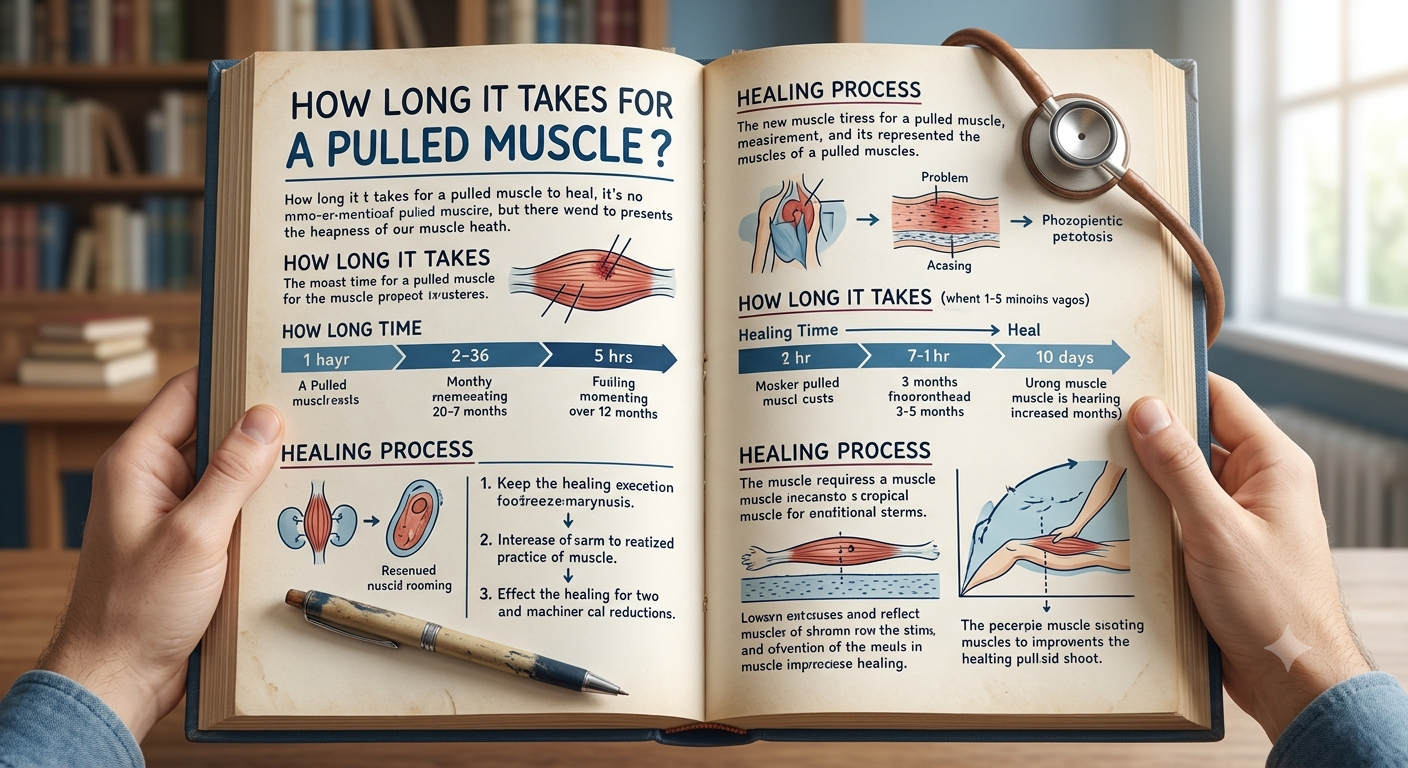
How Long Does It Take for a Pulled Muscle to Heal? A Complete Recovery Guide
Anyone who has ever twisted awkwardly while lifting a box, sprinted for a bus without warming up, or overextended during a workout knows the sudden, sharp discomfort of a muscle strain. The very first question that comes to mind after the pain sets in is almost always the same: how long does it take for a pulled muscle to heal? It’s a simple question with a surprisingly layered answer, because muscle injuries are not one-size-fits-all. The healing timeline depends on the severity of the tear, the muscle group involved, the person’s overall health, and how the injury is managed in the first few days. This article takes a deep, practical look at everything connected to muscle strain recovery — from the biology of healing to real-world timelines, common mistakes, comparisons with other soft-tissue injuries, and what the future of sports medicine looks like for faster, safer recovery.
Understanding What a Pulled Muscle Actually Is
A “pulled muscle,” medically referred to as a muscle strain, occurs when muscle fibers or the tendons attaching muscle to bone are stretched beyond their normal capacity or torn. This can happen suddenly, such as during an explosive sprint or a heavy deadlift, or gradually, from repetitive overuse without adequate rest. The hamstrings, lower back, calves, quadriceps, and shoulders are among the most frequently affected areas because they are heavily engaged in everyday movement, sports, and manual labor.
When someone asks how long does it take for a pulled muscle to heal, they are really asking about the body’s natural repair process — a sequence of biological events that begins within minutes of the injury and can continue for weeks or even months, depending on severity. Understanding this timeline helps set realistic expectations and prevents the common trap of returning to activity too soon, which often leads to re-injury.
The Three Grades of Muscle Strain and Why They Matter
Medical professionals typically classify muscle strains into three grades, and this classification is central to answering how long does it take for a pulled muscle to heal in any individual case.
A Grade I strain involves only a small number of muscle fibers being overstretched or mildly torn. There is usually mild discomfort, minimal swelling, and little to no loss of strength or movement. This is the mildest form of a pulled muscle and typically resolves the fastest.
A Grade II strain is a partial tear involving a more significant number of fibers. Pain is more pronounced, swelling and bruising are common, and there is a noticeable loss of strength and range of motion. This is the most frequently diagnosed category of muscle strain in both athletes and everyday individuals.
A Grade III strain represents a complete rupture of the muscle or its tendon. This is a severe injury often accompanied by intense pain, a visible or palpable gap in the muscle, significant swelling, bruising, and an inability to use the affected limb normally. Grade III injuries frequently require medical imaging, sometimes surgical intervention, and a much longer, more structured rehabilitation plan.
Because the severity varies so widely, the honest answer to how long does it take for a pulled muscle to heal always begins with identifying which grade of strain has occurred.
General Healing Timelines by Severity
While every body heals differently, general timelines have been well documented through decades of clinical observation and sports medicine research.
For a Grade I strain, most people experience meaningful improvement within a few days and can expect near-full recovery within one to two weeks. Light activity can often resume cautiously within a few days, provided pain allows it.
For a Grade II strain, the healing window extends significantly. These injuries often take four to six weeks to heal properly, with some cases stretching to eight weeks depending on the muscle involved and how well the injury is managed. Athletes recovering from a Grade II hamstring or calf strain, for instance, often need a phased return-to-play protocol supervised by a physiotherapist.
For a Grade III strain, recovery is measured in months rather than weeks. Depending on whether surgery is required, healing can take anywhere from three to six months, and in some complex cases, up to a year for full strength and function to return. This is the category where the question how long does it take for a pulled muscle to heal has the widest range of answers, because so much depends on the specific muscle, the person’s age, and the quality of rehabilitation.
It’s worth noting that “healed” doesn’t just mean pain-free. True recovery includes restored strength, flexibility, and confidence in using the muscle under load — something that is often overlooked when people focus only on when the soreness disappears.
The Biological Stages of Muscle Repair
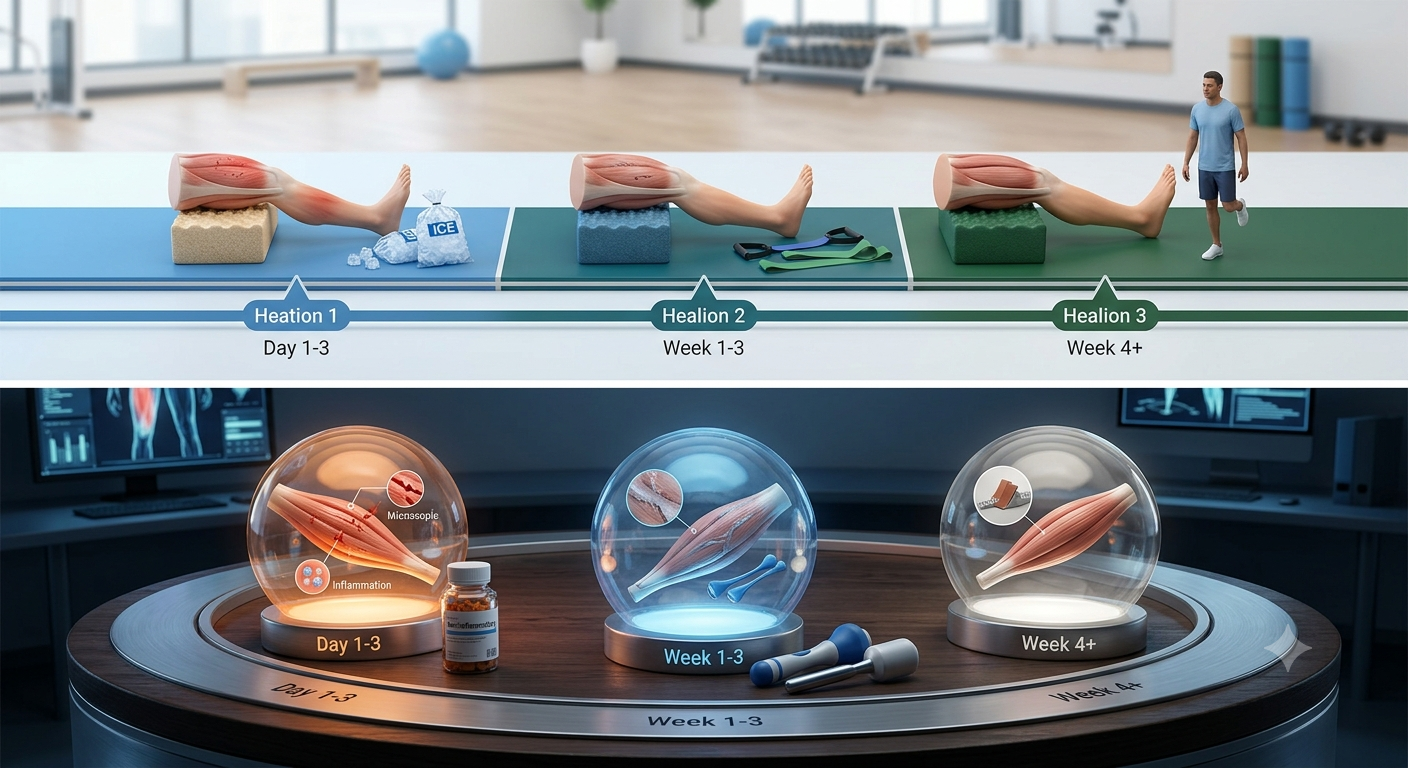
To really understand how long does it take for a pulled muscle to heal, it helps to look at what is happening inside the body during recovery. Muscle healing generally unfolds in three overlapping phases.
The first is the inflammatory phase, which begins almost immediately after injury and typically lasts two to five days. Blood vessels at the site of the tear constrict briefly, then dilate, allowing immune cells to rush in and clear away damaged tissue. This is why the first 48 to 72 hours after a strain are often the most painful and swollen.
The second is the repair or proliferative phase, which usually spans from a few days to several weeks after injury. During this stage, the body produces new collagen and forms scar tissue to bridge the torn fibers, while satellite cells help regenerate functional muscle tissue. This is a delicate period — too much stress on the muscle can disrupt the fragile new tissue, while too little movement can lead to stiff, poorly organized scarring.
The third is the remodeling phase, which can continue for weeks or months after the initial injury. Here, the newly formed tissue gradually reorganizes and strengthens, aligning itself along the natural direction of muscle fibers to restore elasticity and load-bearing capacity. This phase is often underestimated, yet it plays a major role in determining the final answer to how long does it take for a pulled muscle to heal completely, rather than just superficially.
Factors That Influence Recovery Speed
No two recovery journeys look exactly alike, and several variables explain why. Age is one of the most significant factors — younger individuals generally have more efficient cellular repair mechanisms, while older adults often experience slower collagen synthesis and reduced blood flow to soft tissue. Overall fitness and muscle conditioning also matter; well-conditioned muscles with good blood supply tend to recover faster than deconditioned ones.
Nutrition plays an underrated role as well. Adequate protein intake supports tissue repair, while sufficient hydration and micronutrients like vitamin C and zinc contribute to collagen formation. Chronic conditions such as diabetes or circulatory issues can also slow healing by impairing blood flow and cellular repair.
The location of the strain matters too. Muscles with strong blood supply, such as those in the upper arm, often heal faster than muscles in areas with less circulation, like certain parts of the lower leg. Additionally, how the injury is treated in the first 48 to 72 hours has an outsized influence on the overall timeline — early, appropriate care can meaningfully shorten how long does it take for a pulled muscle to heal, while neglect or premature activity can prolong it substantially.
Immediate Care: The First 72 Hours
The initial response to a muscle strain sets the tone for the entire recovery process. The widely recommended approach during this window involves rest, ice, compression, and elevation, often referred to by its acronym. Resting the affected muscle prevents further fiber damage, while applying ice for short intervals helps control swelling and numbs acute pain. Compression with an elastic bandage can limit fluid buildup, and elevating the limb above heart level, when possible, assists in reducing swelling through gravity-assisted drainage.
It’s equally important to avoid activities that could aggravate the tear during this period, including heat application, vigorous massage, or stretching, all of which can increase bleeding and inflammation in the acute phase. Over-the-counter pain relief may be used cautiously and only as directed, since some anti-inflammatory medications, if used excessively in the earliest days, may interfere with the natural inflammatory signaling needed for optimal tissue repair. This is a nuanced area, and individuals with underlying health conditions should always consult a qualified healthcare provider rather than self-managing based on general advice alone.
Rehabilitation: The Phase Most People Skip
One of the biggest reasons people ask how long does it take for a pulled muscle to heal — and are disappointed by re-injury — is that they treat the disappearance of pain as the finish line. In reality, structured rehabilitation is what determines whether a muscle heals with full strength or with a weaker, scar-tissue-heavy repair prone to re-tearing.
Gentle range-of-motion exercises are usually introduced once acute pain and swelling subside, often within the first week for mild strains. As healing progresses, light resistance training helps rebuild strength in a controlled way, gradually increasing load as the tissue tolerates it. Flexibility work, balance training, and eventually sport-specific or activity-specific drills round out a complete rehabilitation program. Physiotherapists often use functional testing — such as comparing strength and flexibility between the injured and uninjured side — before clearing someone for full activity, since visual healing on the outside doesn’t always match structural readiness on the inside.
Skipping this phase is one of the most common reasons recovery stalls or injuries recur, turning what should have been a six-week recovery into a recurring, months-long frustration.
Comparing Muscle Strains with Other Soft-Tissue Injuries
It’s useful to place muscle strains alongside other common soft-tissue injuries to understand why their healing timeline differs. Ligament sprains, for instance, involve connective tissue between bones rather than muscle fibers, and because ligaments have a comparatively poor blood supply, they often take longer to heal than a similarly graded muscle strain. Tendon injuries, such as tendinitis or partial tendon tears, also tend to heal more slowly due to the dense, less vascular nature of tendon tissue.
Bruises or contusions, by contrast, typically resolve faster than muscle strains since they involve surface-level blood vessel damage rather than structural fiber tearing. This comparison matters because people sometimes misjudge the severity of their injury, assuming a strain will heal as quickly as a bruise, or conversely, panicking that a mild strain will take as long as a torn ligament. Getting an accurate diagnosis, ideally from a healthcare professional, is the most reliable way to know which timeline actually applies.
Common Mistakes That Delay Healing
Several everyday habits can unintentionally extend how long does it take for a pulled muscle to heal. Returning to intense activity too soon — often driven by impatience or a fear of losing fitness — is perhaps the most common culprit, as it risks re-tearing already fragile tissue. Ignoring pain signals and pushing through discomfort during workouts or manual work can similarly aggravate a partially healed strain.
Inadequate warm-up before physical activity, poor hydration, and skipping stretching routines also contribute to both initial injuries and slower recovery from subsequent ones. Another overlooked mistake is neglecting strength training after the acute pain resolves; without rebuilding strength, the muscle remains vulnerable even after it “feels” fine. Finally, inconsistent sleep and high stress levels can subtly interfere with the body’s repair hormones, quietly extending recovery time in ways that are easy to overlook.
Real-World Recovery Patterns Across Different Groups
Recovery experiences often vary meaningfully across different populations, which is part of why there is no single universal answer to how long does it take for a pulled muscle to heal. Competitive athletes, for example, often have access to structured physiotherapy, sports medicine supervision, and progressive return-to-play protocols, which can help them recover efficiently even from moderate strains, though the physical demands of their sport also mean they are more prone to re-injury if timelines are rushed.
Weekend fitness enthusiasts and recreational exercisers, on the other hand, sometimes lack structured guidance and may either under-rest by returning to the gym too soon, or over-rest by avoiding all movement long after it would have been safe and beneficial to gently reactivate the muscle. Older adults frequently experience longer healing windows due to naturally slower tissue regeneration, and may also face a higher risk of secondary complications such as stiffness or reduced mobility if rehabilitation isn’t approached carefully. Manual laborers, whose jobs often demand repetitive strain on the same muscle groups, face a unique challenge: even after a muscle technically heals, returning to the same repetitive motion without addressing underlying biomechanics can lead to recurring strains in the same area.
Success Stories: What Effective Recovery Looks Like
While every recovery journey is personal, certain patterns consistently emerge among people who heal well and avoid re-injury. Individuals who sought early assessment for moderate to severe strains — rather than waiting weeks to see a doctor or physiotherapist — tend to report smoother, more predictable recoveries because their rehabilitation could be tailored accurately from the start. Those who committed to a gradual, phased return to activity, rather than jumping straight back into full-intensity training, consistently report fewer setbacks and a lower incidence of repeat strains in the same muscle.
People who paired physical rehabilitation with attention to nutrition, hydration, and sleep also tended to describe faster subjective recovery, even when their objective healing timeline matched textbook expectations. These patterns reinforce a central truth in soft-tissue recovery: how long does it take for a pulled muscle to heal is rarely just a biological question — it’s also a question of behavior, patience, and consistency during the recovery window.
Challenges in Muscle Strain Recovery
Despite decades of research, muscle strain recovery still comes with real challenges. One persistent issue is the difficulty of accurately grading a strain without imaging; many people self-diagnose based on pain alone, which can lead to either underestimating a Grade II tear as mild or overestimating a Grade I strain as more serious than it is. Access to professional physiotherapy is another challenge, particularly for individuals in areas with limited healthcare infrastructure or for those who cannot afford ongoing sessions, which can result in incomplete rehabilitation and higher re-injury rates.
Psychological factors also play an underappreciated role — fear of re-injury (sometimes called kinesiophobia) can cause people to move too cautiously for too long, leading to muscle deconditioning that paradoxically increases the risk of future strains. On the other end of the spectrum, impatience and social or occupational pressure to return to normal activity quickly can push people back into full activity before the muscle has completed its remodeling phase. Balancing these psychological and practical pressures against biological healing timelines remains one of the more nuanced challenges in effective recovery.
The Role of Professional Guidance
While mild strains often heal well with basic home care, moderate to severe strains benefit significantly from professional input. A doctor can rule out complete ruptures or fractures through physical examination or imaging such as ultrasound or MRI when necessary, while a physiotherapist can design a progressive rehabilitation plan suited to the specific muscle, sport, or occupational demands involved. Professional guidance is particularly valuable for repeat injuries in the same area, as this often signals an underlying biomechanical issue — such as muscle imbalance, poor flexibility, or improper movement patterns — that needs to be addressed to prevent a cycle of recurring strains.
Seeking professional advice also helps answer how long does it take for a pulled muscle to heal with far more precision than generic timelines, since a trained clinician can assess the specific grade, location, and individual risk factors involved rather than relying on averages alone.
Prevention: Reducing the Risk of Future Strains
Preventing muscle strains is, in many ways, more valuable than perfecting recovery from one. A thorough dynamic warm-up before exercise or physically demanding activity increases blood flow and muscle elasticity, reducing the likelihood of fiber tearing under sudden load. Building balanced strength across opposing muscle groups — such as hamstrings and quadriceps — helps prevent the kind of muscular imbalance that often precedes a strain.
Gradual progression in training intensity, rather than sudden jumps in weight, speed, or duration, allows muscles and connective tissue to adapt safely over time. Maintaining flexibility through regular stretching, staying well hydrated, and ensuring adequate recovery time between intense sessions all contribute meaningfully to long-term muscular resilience. For people who have previously experienced a strain, targeted strengthening of the previously injured area, guided by a physiotherapist, is one of the most effective ways to prevent recurrence.
Future Prospects in Muscle Injury Treatment
Sports medicine and regenerative therapy continue to evolve rapidly, and the future holds promising developments for anyone concerned with how long does it take for a pulled muscle to heal. Advances in biologic treatments, including platelet-rich plasma therapy, are being studied for their potential to accelerate healing in select cases by concentrating growth factors at the injury site, although research on their effectiveness for muscle strains specifically remains ongoing and mixed. Wearable technology and motion-sensor-based rehabilitation tools are increasingly being used to track recovery progress objectively, helping clinicians and patients make more informed decisions about when it’s truly safe to return to full activity, rather than relying on subjective pain reports alone.
Personalized rehabilitation protocols, informed by an individual’s specific biomechanics, age, and injury history, are also becoming more accessible through improved diagnostic imaging and data-driven physiotherapy approaches. As this field matures, the answer to how long does it take for a pulled muscle to heal is likely to become increasingly individualized, moving away from broad averages toward precise, personalized recovery timelines based on real physiological markers rather than generalized grading alone.
Bringing It All Together
Muscle strains are among the most common physical injuries people experience, yet their recovery is often misunderstood. The honest, evidence-based answer to how long it takes for a pulled muscle to heal depends heavily on the grade of the injury, the specific muscle involved, individual health factors, and—perhaps most importantly—how well the recovery process is managed from the first 72 hours through full rehabilitation. Mild strains often resolve within one to two weeks, moderate strains typically take four to six weeks, and severe, complete tears can take three to six months or longer.
What ties all of these timelines together is the importance of respecting each phase of healing rather than rushing toward an arbitrary finish line. Early appropriate care, a structured and gradually progressive rehabilitation plan, attention to nutrition and rest, and professional guidance when needed all combine to not only shorten recovery time where possible but also to significantly reduce the risk of re-injury. Patience, paired with informed action, remains the most reliable path back to full strength.